There is a question I now add to the assessment of several different clinical presentations: does anyone tell you that you snore? Or that you stop breathing in your sleep?
I ask it when someone comes with fatigue that is not explained by thyroid tests, blood counts, and iron studies. I ask it when someone's blood pressure is difficult to control despite multiple medications. I ask it when a man in his 50s describes waking unrested regardless of how many hours he has spent in bed. I ask it when someone describes falling asleep at traffic lights.
In a meaningful proportion of cases, the answer identifies obstructive sleep apnoea (OSA) - a common, significantly under-diagnosed condition that can be causing or contributing to all of these presentations. The person sleeping next to them often knows before any doctor does. But nobody asked.
Who gets sleep apnoea and why
OSA is common - affecting approximately 4-7% of the general adult population - but dramatically underdiagnosed. Most people with OSA have not been diagnosed.
Multiple studies document significantly higher OSA prevalence and greater OSA severity in Black adults compared to white adults, independent of obesity. The mechanisms include differences in upper airway anatomy and craniofacial structure, higher rates of obesity and hypertension (both major OSA risk factors), and possible differences in ventilatory control responses during sleep.
Risk factors include:
Obesity: The most important modifiable risk factor. Excess adipose tissue around the neck and pharynx narrows the upper airway. A neck circumference above 40cm (women) or 43cm (men) is associated with significantly elevated OSA risk.
Male sex: Men are approximately twice as likely to have OSA as pre-menopausal women. After menopause, the gap closes significantly - oestrogen appears to have a protective effect on upper airway muscle tone.
Age: OSA prevalence increases with age as airway muscle tone diminishes.
Craniofacial anatomy: Retrognathia (recessed jaw), micrognathia (small jaw), high arched palate, and enlarged tonsils all reduce the upper airway space.
Alcohol and sedatives: Relax upper airway muscles, worsening OSA significantly. Even moderate alcohol consumption before bed worsens oxygen desaturation in people with OSA.
Nasal obstruction: Deviated septum, polyps, and chronic rhinitis increase upper airway resistance and the tendency to breathe through the mouth during sleep, worsening OSA.
Symptoms - what to look for
The person with OSA usually experiences fragmented sleep but is often unaware of the cause. The bed partner often notices the problem first.
Bed partner report: Loud, chronic snoring - often the first sign noticed. Witnessed pauses in breathing during sleep, followed by gasping, choking, or snorting as breathing resumes. Restless, disturbed sleep.
Symptoms the person with OSA experiences: Excessive daytime sleepiness (EDS): The most characteristic symptom. Falling asleep in inappropriate situations - watching television, reading, in meetings, at traffic lights. The Epworth Sleepiness Scale (ESS) is an 8-item validated questionnaire measuring EDS. A score of 10 or above warrants investigation. Search for it and complete it before your GP appointment.
Waking unrefreshed despite adequate hours in bed - not feeling as though sleep was restorative.
Morning headaches - caused by carbon dioxide retention during episodes of reduced breathing.
Nocturia - waking to urinate multiple times per night. Atrial natriuretic peptide release during the negative intrathoracic pressure of apnoea events promotes sodium and water excretion, causing nocturia.
Cognitive difficulties - poor concentration, memory problems, slowed thinking. Severe in some people.
Irritability and mood changes.
Reduced libido.
Sleep apnoea and cardiovascular disease
OSA is not just a nuisance condition causing tiredness. It has significant documented cardiovascular consequences.
Each apnoea event causes: hypoxia (oxygen desaturation), surges of sympathetic nervous system activation and cortisol, mechanical stress on the cardiovascular system from the negative intrathoracic pressure generated trying to breathe against a closed airway, and sleep fragmentation. These events happen hundreds of times per night, every night.
The cardiovascular consequences of untreated OSA include: hypertension (affecting approximately 50-60% of people with OSA; OSA is one of the most common causes of treatment-resistant hypertension); increased risk of atrial fibrillation; increased risk of heart attack and stroke; and worsening of heart failure.
Treating OSA significantly reduces blood pressure in hypertensive patients - in some cases allowing reduction of antihypertensive medication. It reduces atrial fibrillation recurrence after cardioversion. It reduces traffic accident risk. In people with heart failure, treating OSA (particularly central sleep apnoea or Cheyne-Stokes breathing) improves cardiac function.
Case study: Chukwuemeka's treatment-resistant hypertension
Chukwuemeka, 47, came to me for a hypertension review. He was on two antihypertensive medications. His blood pressure remained 158/96 despite adherence.
At the end of the consultation, I asked the question I now routinely ask: does anyone tell you that you snore? He laughed. "My wife moved to the spare room two years ago."
Does she ever say you stop breathing? Yes - she had mentioned it. He had not thought to mention it.
Epworth Sleepiness Score: 16 out of 24.
I referred him for a home sleep study. The result: severe OSA - apnoea-hypopnoea index (AHI) of 42 events per hour (above 30 = severe). Oxygen saturation below 90% for 18% of the night.
He was fitted with CPAP and adapted to it over three weeks. At his eight-week review: blood pressure 128/76 - lower than at any review in the previous four years on two medications. Daytime sleepiness resolved. His wife had returned to the bedroom.
His treatment-resistant hypertension had been driven substantially by untreated severe OSA - hundreds of sympathetic nervous system surges every night, for years.
Treatment
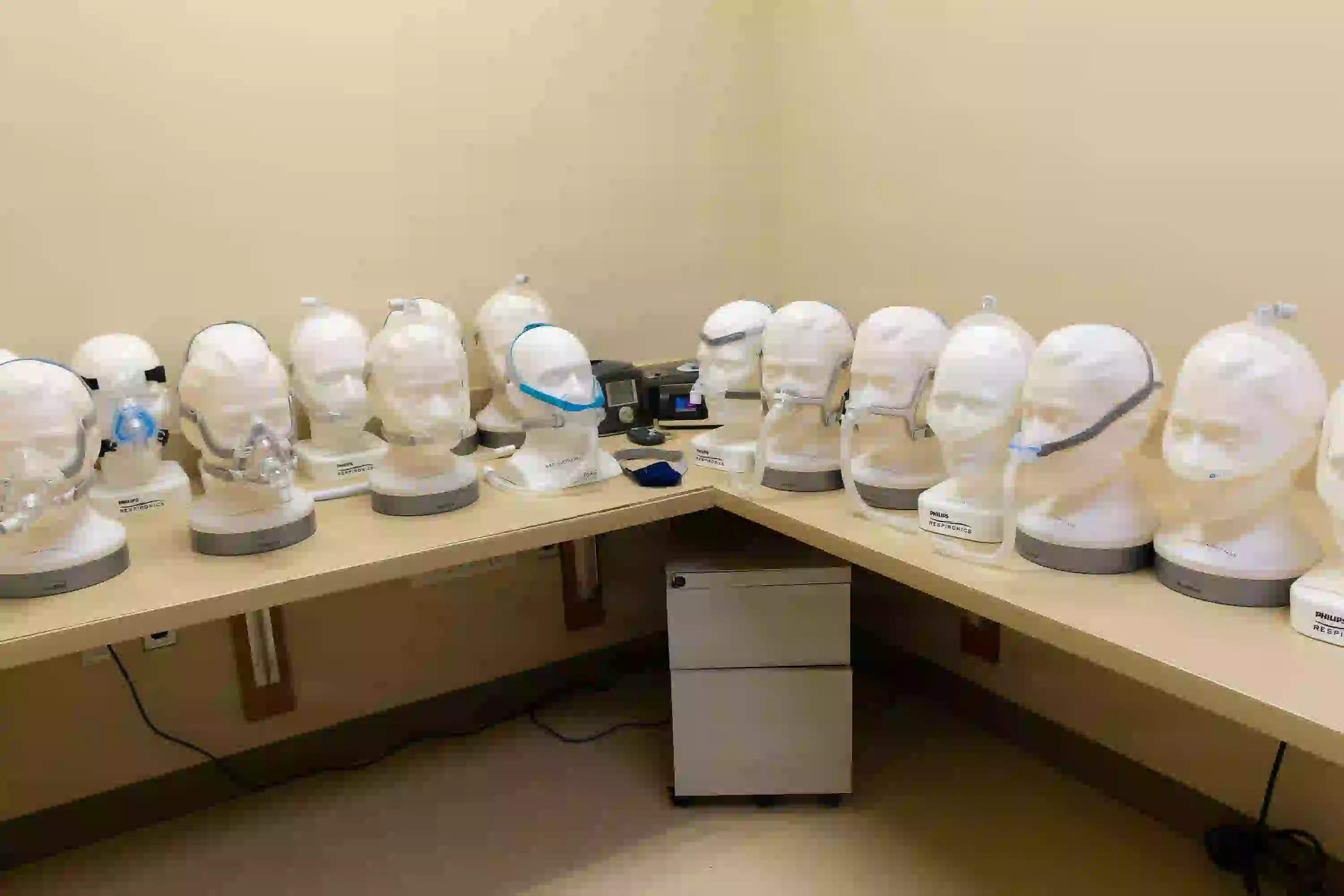
CPAP (Continuous Positive Airway Pressure): The gold standard treatment for moderate-severe OSA. A machine generates pressurised room air delivered through a mask during sleep, maintaining positive pressure in the upper airway and preventing collapse. Highly effective - eliminates apnoea events in most people when used correctly and consistently.
The main challenge is adaptation. CPAP masks can feel claustrophobic and intrusive. The first 2-4 weeks are typically the most difficult. Good mask fitting, support from the sleep clinic team, and persistence through the adaptation period are critical. Auto-titrating CPAP (APAP) is now commonly used - it adjusts pressure breath-by-breath, generally better tolerated than fixed pressure.
Mandibular Advancement Devices (MAD): Dental appliances that hold the lower jaw forward, increasing the upper airway space. Less effective than CPAP for severe OSA but a reasonable option for mild-moderate OSA or CPAP-intolerant patients.
Weight loss: Meaningful weight loss (10% or more of body weight) significantly reduces OSA severity and in some cases resolves it. The SURMOUNT-OSA trial (2024) showed tirzepatide reduced apnoea-hypopnoea index by approximately 63% in obese patients with OSA.
Positional therapy: OSA is often significantly worse when sleeping on the back (supine position). For positional OSA, avoiding the supine position can be adequate treatment.
DVLA requirement: Drivers diagnosed with OSA must inform the DVLA and must not drive until effectively treated and free of significant daytime sleepiness. This is a legal obligation, not optional.
Sources: NICE Clinical Guideline NG202 - Obstructive Sleep Apnoea/Hypopnoea Syndrome and Obesity Hypoventilation Syndrome in Over 16s (2021); Kapur VK et al, Journal of Clinical Sleep Medicine 2017 (clinical guidelines for OSA diagnosis); Punjabi NM, PNAS 2008 (epidemiology of adult OSA); Drager LF et al, Journal of the American College of Cardiology 2013 (OSA and cardiovascular disease); DVLA - Assessing fitness to drive 2024; Malhotra A et al, NEJM 2024 (SURMOUNT-OSA trial).